
can you produce a single bespoke sample?
It's a question we're asked quite often, and the answer lies in the way traditional print processes work.
Unlike digital printing, heritage techniques such as hot foil stamping, letterpress and embossing aren't simply a case of pressing "print". Every bespoke design begins with the production of a custom photopolymer or magnesium printing plate, made specifically for your artwork.
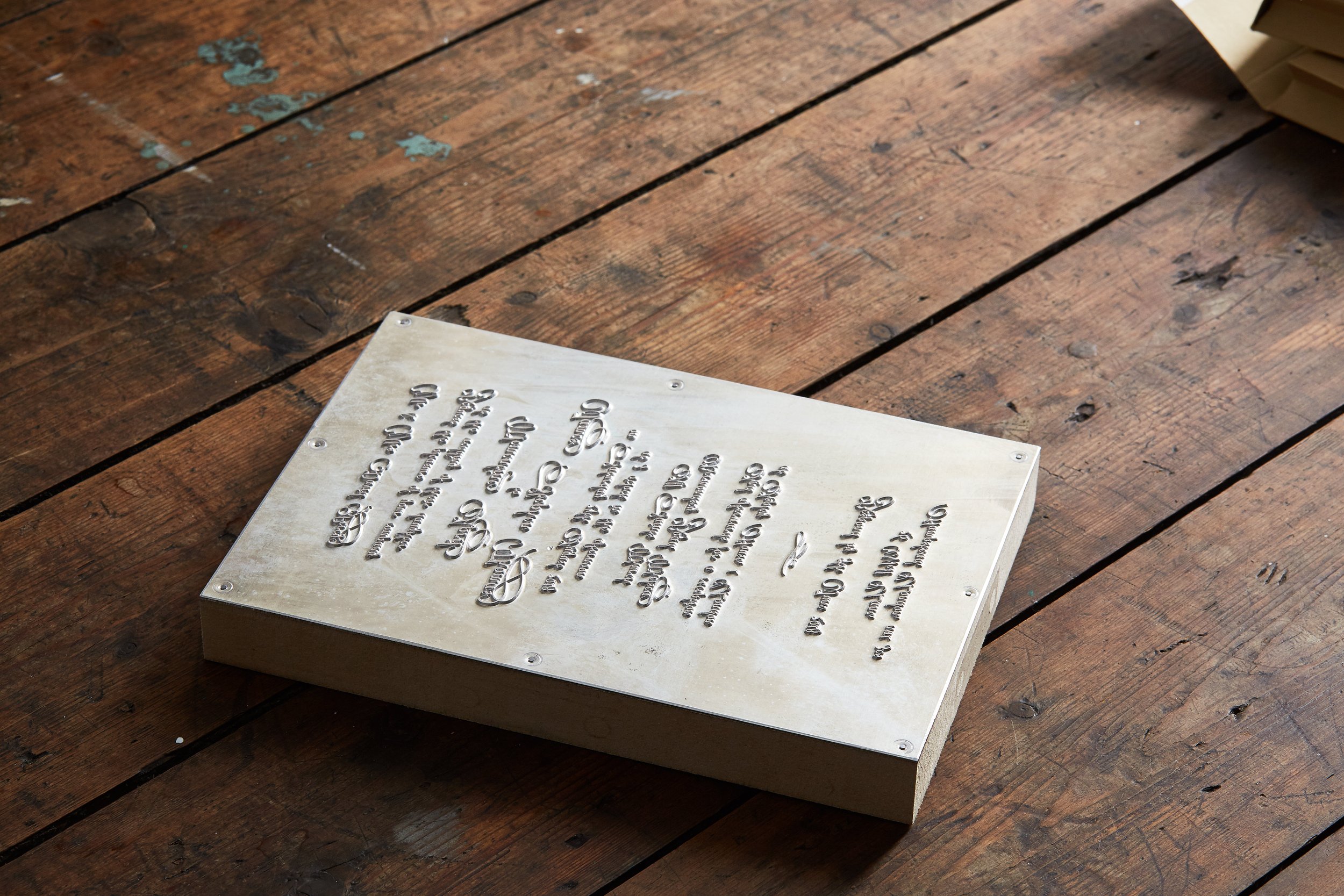
Magnesium printing plate
Once the plate arrives, it is carefully mounted onto the press before the real work begins. Each paper behaves slightly differently, so the pressure, packing and registration all need to be adjusted by hand until the impression is just right. This process can take a considerable amount of time, and it's not unusual for the first 30–40 impressions to be used simply to refine the setup before the finished invitations are printed.
Once everything has been prepared, producing the remaining invitations is relatively quick and inexpensive. In fact, most of the cost of a heritage print run is invested in creating that very first perfect print.
If we were to stop after producing a single sample, wait for approval, and then return to print the full order later, the press would need to be set up again from the beginning. The plate would have to be remounted, the pressure recalibrated and the impression refined once more. As these are traditional hand-adjusted processes, recreating exactly the same impression a second time is neither practical nor economical.
More importantly, heritage printing is never an automated process. We don't simply press "print" and walk away. Throughout every print run we're continually assessing the results, making small adjustments to pressure, registration and the way the paper is running through the press to achieve the very best finish. If something isn't printing exactly as we'd expect, we'll stop the press, investigate the issue and make the necessary adjustments before continuing. That attention to detail is one of the reasons traditional print takes longer than modern digital methods, but it's also what gives each finished piece its distinctive quality.
Instead, we prepare a detailed PDF artwork proof for approval before printing begins, giving you the opportunity to check wording, layout and every design detail. We can also supply examples of our papers and heritage print finishes, allowing you to experience the quality and craftsmanship before your invitations go into production.
This approach allows us to invest our time in producing one beautifully finished print run, rather than repeating the lengthy setup process twice. It helps us maintain the highest standards of quality while keeping the overall cost of bespoke wedding stationery as reasonable as possible.